

Geneva – October 20, 2026
SAM for Rights and Liberties stated that field information it obtained, together with human rights reports and local and UN statements it reviewed, reveals a serious escalation in attacks against civilians and residential areas in Taiz Governorate on October 19 and 20, 2026. These developments coincide with the continuing siege and restrictions imposed on roads and essential supplies, threatening to increase civilian casualties, bring health and water services to the brink of collapse, and expose hundreds of thousands of residents to growing risks.
Preliminary figures for separate incidents in which victims or casualty numbers could be identified indicate that at least six people were killed and 17 others injured over the two days, including women and children, as a result of shelling, gunfire, a landmine explosion, and an attack on an ambulance. These figures remain subject to revision, given conflicting reports concerning some attacks and incomplete information about all victims, particularly the attack on residential neighborhoods in Taiz city on October 20. The figures do not include casualties from previous days or cases already documented during earlier periods.
The incidents included the killing of a man and his daughter when a mortar shell struck their home in Al-Misrakh District, and the deaths of three women and one man in separate incidents in Taiz city and its surrounding rural areas the following day, including a victim killed during the shelling of the Saynah neighborhood. An ambulance driver was also killed and his companions injured while they were on their way to evacuate wounded persons. An 11-year-old boy suffered a landmine explosion that resulted in the amputation of his right foot and left hand, as well as an eye injury. Another report concerned a child injured after refusing recruitment into the Houthi group.
These developments coincided with a new UN warning issued on October 20 by the Humanitarian Coordinator in Yemen, Laurent Bukera, that Taiz's health system was approaching collapse because of shortages of fuel, oxygen, and medicines. Prices of remaining food supplies and fuel had more than doubled, while water production had fallen by half, amid continuing difficulties in delivering vital supplies to the city.
In preparing this briefing, SAM relied on information collected by its field monitors concerning several victims, alongside a review of statements issued by local and UN bodies, firsthand accounts, published testimonies, and audiovisual materials available through open sources. Wherever possible, the organization sought to cross-check sources and compare victims' names, ages, incident dates and locations, and the nature of their injuries, while distinguishing between incidents for which it obtained direct information and those based on published sources.
SAM emphasizes that repeated publication of an incident, or its inclusion in multiple casualty reports, does not indicate additional incidents or victims. Subsequent updates have therefore been treated as supplementary information concerning the original incidents, with a distinction maintained between preliminary casualty figures and information still requiring independent verification.
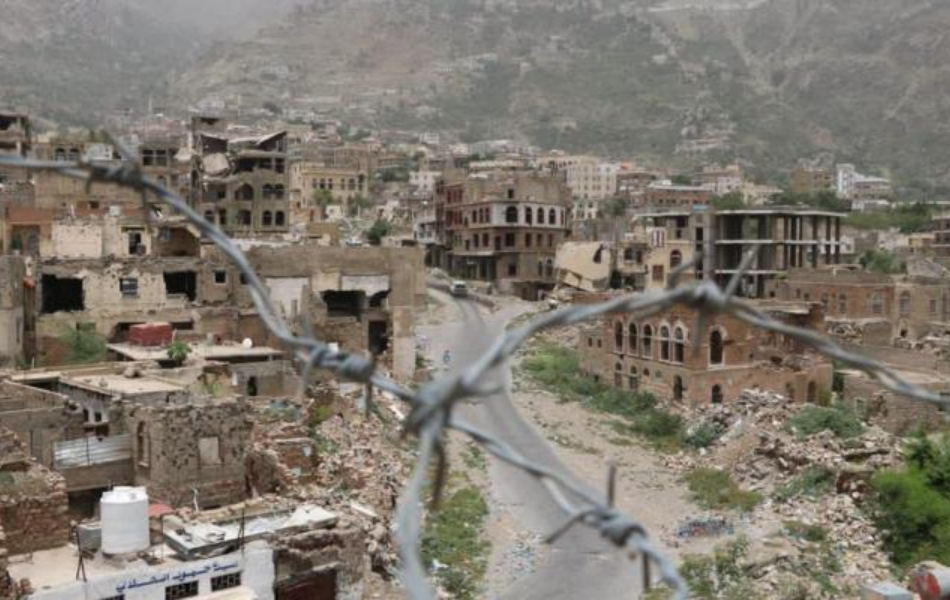
On Tuesday, October 20, 2026, Taiz city witnessed a renewed escalation in attacks against populated residential areas, particularly the Saynah neighborhood and surrounding areas. Civilian deaths and injuries were reported, including among women and children, alongside extensive damage to residents' homes and property.
According to preliminary casualty figures published by the Taiz Siege Affairs Office, Raghad Jamil Saeed Abdu, 20, was killed after sustaining multiple shrapnel injuries across her body in the Saynah area. She was pronounced dead upon arrival at the hospital.
The Office identified eight injured persons: Maram Anis Ali Murshid, 17, who sustained a shrapnel injury to the chest in the Al-Masbah area; Enas Mahyoub Ali Nasr, 30, who sustained shrapnel injuries to the chest, face, and neck; Emad Mahyoub Ali Nasr, 34, who sustained multiple shrapnel injuries across his body; and Saba Ali Noman Abdu, 25, who sustained shrapnel injuries to the head.
The list also included five-year-old Rayan Aziz Mahyoub Saleh, who sustained multiple shrapnel injuries across his body; two-year-old Raneen Aziz Mahyoub Saleh, who sustained multiple shrapnel injuries; Rayhana Jamal Abdu Mohammed, 25, who sustained multiple shrapnel injuries; and six-year-old Sima Mohammed Tawfiq, who also sustained multiple shrapnel injuries. According to the published information, these last seven injuries occurred in the Saynah area.
The ages recorded in the list indicate that four of the injured were under 18, although the summary accompanying the statement referred to only two children. This discrepancy requires a review of medical records and verification of the victims' age classifications, without affecting the overall number of eight injured persons identified in the list.
Al Jazeera published footage showing the destruction caused by the shelling of a densely populated residential neighborhood in Taiz city, including damaged buildings and homes, shattered glass, and scattered debris. Taiz Time also published footage of the shelling, as well as videos documenting damage to civilian homes.
In a related development, local reports described a ballistic missile attack on the area that reportedly killed two people, injured more than 20 others, and damaged several homes. The Associated Press, in a report published on October 20, also reported that two girls were killed and six people injured in an attack on a residential area of Taiz city, publishing photographs of the destruction in the Saynah neighborhood.
SAM notes that these casualty figures differ from the detailed preliminary list issued locally in terms of the number and descriptions of the victims. It remains unclear whether all the reports concern the same incident, reflect successive updates, or relate to attacks that occurred close together. The organization therefore does not combine or add these figures together and emphasizes the need to obtain final medical records and cross-check them against projectile impact locations and victims' identities.
SAM stresses that attacks involving weapons with wide-area effects in densely populated residential neighborhoods raise serious concerns regarding compliance with the principles of distinction, proportionality, and precautions in attack. Such incidents require independent investigations into the nature of the weapons used, their launch locations, intended targets, and impact on civilians.
On October 19, 2026, Mohammed Qasim Ali Al-Sabri and his daughter, Mushira Mohammed Qasim Ali Al-Sabri, 34, were killed when a mortar shell struck the family home in Al-Adan village, Al-Misrakh District, southern Taiz Governorate.
According to information published by the Taiz Siege Affairs Office, the shell was fired by the Houthi group toward the village, killing the father and daughter in the vicinity of their home. In a separate update, the Office also reported that Hayat Abdulraqib Mohsen Ali, 70, was injured in the same shelling.
Available information indicates that villages in Al-Misrakh, Sabir Al-Mawadim, and Al-Arous districts continue to experience repeated shelling, increasing the risks facing residents and limiting their ability to remain safely in their homes and carry out their daily activities.
SAM emphasizes that targeting civilian homes or carrying out indiscriminate attacks against populated areas violates international humanitarian law. The circumstances of this incident require an investigation into the shell's origin, the intended target, and the precautions taken to avoid civilian casualties.
One of the most serious incidents recorded on October 20 was an attack against an ambulance in the Al-Sarari area of Al-Misrakh District, southern Taiz, while it was on its way to evacuate wounded people from an area affected by armed clashes.
The Taiz Siege Affairs Office reported that shelling attributed to the Houthi group struck the ambulance, killing its driver and injuring his companions.
This information is supported by a firsthand testimony published by Akram Al-Haj, one of the survivors. He explained that he had boarded the ambulance with the driver and a third person after receiving permission to leave a military position, and that the vehicle was heading to evacuate wounded persons at the foot of the mountain.
SAM Organization for Rights and Liberties documented preliminary information concerning the shelling of an ambulance in the Al-Shaqab area of Sabir Al-Mawadim District, south of Taiz city, on Tuesday, 20 October 2026, while it was carrying out a mission to evacuate wounded persons from an area affected by ongoing hostilities. According to information received by the organization, the incident resulted in the death of the ambulance driver, Hussam Na'amam Abdullah Abduljalil (25), a resident of Al-Dhabu'ah, who was pronounced dead upon arrival at the hospital after sustaining multiple shrapnel wounds to his body. Other persons accompanying him were injured, and the ambulance was destroyed.
The organization's preliminary information also indicated that the ambulance was involved in an attempt to evacuate Taybah Abdulraqeeb Abdu Abdullah (18), a young woman who had previously sustained a gunshot wound in the Al-Shaqab area and subsequently died. However, the precise sequence of events surrounding her injury and death, including whether she was inside the ambulance when it came under fire, remains to be corroborated against witness statements and medical records.
The information concerning the shelling of the vehicle is further supported by a firsthand account published by Akram Al-Haj, one of the survivors of the incident. He stated that he boarded the ambulance together with the driver and another person after being permitted to leave a military position, and that the vehicle was on its way to evacuate wounded persons located at the foot of the mountain. According to his account, the ambulance came under shelling while in motion, killing the driver immediately and causing a severe arm injury to the other accompanying person, while Al-Haj himself sustained shrapnel injuries to the head.
Al-Haj added that the shelling continued after the ambulance had stopped, forcing him to leave the vehicle and take shelter behind a tree. Meanwhile, the injured companion continued calling for help, repeatedly pleading: “Oh God, I have children... Help me.” Another vehicle subsequently arrived carrying wounded persons who had been awaiting evacuation and transported the survivors and injured persons to Al-Arous Hospital, from where they were referred to Al-Thawra General Hospital in Taiz city.
This testimony is of particular evidentiary significance because it was provided by an individual who reported being inside the vehicle at the time it came under fire. It also contains details concerning the circumstances of the journey, the sequence of events, the locations of the injuries, and the subsequent medical evacuation route. Nevertheless, the testimony alone does not conclusively establish the type of projectile used, its point of origin, or the party responsible for the attack. Although the preliminary information received by SAM attributes the attack to the Houthi group and identifies the projectile as a mortar round, sufficient independent technical evidence has not yet been obtained to confirm either of these elements.
The incident raises serious concerns regarding a possible violation of the special protection afforded to medical transports and medical personnel under international humanitarian law, which requires that they be respected and protected during armed conflicts. Assessing responsibility for the attack requires establishing the nature of the mission being carried out by the vehicle, whether it bore visible identifying emblems or markings, the information reasonably available to the attacking party concerning its use, and whether any exceptional legal circumstances existed that could have affected its protected status.
The information indicating that shelling continued after the vehicle had stopped also warrants an independent investigation into the circumstances of the successive strikes and the extent to which those responsible were aware of the presence of wounded persons and individuals attempting to escape or seek medical assistance.
SAM Organization for Rights and Liberties emphasizes the need for a thorough investigation into the incident, including an examination of the vehicle and any remnants of the projectiles, the collection of medical records relating to the victims and survivors, interviews with witnesses and medical personnel, and the identification of the firing position and the party responsible. Such an investigation is essential to ensuring accountability for any unlawful attack against medical transports and protected persons.
SAM further stresses that ambulances and other means of medical transport enjoy special protection under international humanitarian law and that intentionally directing an attack against them while they are performing a protected medical mission may constitute a war crime where the requisite legal elements are established. The organization also underscores the obligation to protect the wounded and sick, including persons injured during hostilities, and to ensure their evacuation and medical treatment without unlawful impediments.
On October 20, the Taiz Siege Affairs Office reported the killing of Taybah Abdulraqib Abdu Abdullah, 18, a resident of the Al-Shaqab area of Jabal Sabir, after she sustained a gunshot wound to the chest. The shot was attributed to members of the Houthi group.
According to the published information, she arrived at the emergency department of Al-Thawra General Hospital at 9:30 a.m., having already died from her injuries.
In a separate incident on the same day, the Office reported the killing of Mahyoub Amin Qasim Al-Azzani, 65, after he was struck by shrapnel from a howitzer artillery shell while inside his home in the Al-Janahbi area of Al-Shaqab village, southeastern Taiz.
Local information indicates continued shelling of Al-Shaqab, Kahlan, Al-Najjadah, and Al-Uqaymat, accompanied by reports of sniper fire targeting residents and difficulties evacuating the injured.
Mohammed Taher also published a local account concerning the shooting of the wives of Nader Abdulsamad Al-Shuraihi and Riyadh Al-Shuraihi by snipers, alongside difficulties transporting them to hospital. The published material did not provide sufficient details regarding the timing or nature of the injuries or the relevant medical records. Accordingly, these two cases were not added to the casualty figures adopted in this briefing.
SAM emphasizes that continued gunfire and shelling directed toward homes and populated villages expose residents to immediate danger. Each incident requires an independent investigation to establish responsibility for the attacks and protect civilians against their recurrence.
On October 19, Hadi Hael Awad Mohammed, an 11-year-old boy, sustained severe injuries when a landmine exploded beside his home in the Al-Ghallah area of Al-Awashiqah subdistrict, Mawza District, western Taiz Governorate.
According to information and video footage published by the Taiz Siege Affairs Office, the explosion resulted in the amputation of the child's right foot and left hand, as well as an injury to his right eye.
The Office attributed the planting of the landmine to the Houthi group. However, SAM has not obtained independent technical information concerning the type of landmine, when it was planted, or physical evidence identifying the responsible party.
The incident illustrates the devastating impact of landmines on children, particularly when mines are planted or left in civilian areas close to homes and pathways used by residents.
SAM emphasizes that the use of anti-personnel landmines is prohibited under the Anti-Personnel Mine Ban Convention, to which Yemen is a State Party, alongside the obligations established under international humanitarian law to protect civilians from the dangers posed by mines and explosive devices.
The organization calls for an urgent technical survey of the area, identification and clearance of landmines, and the provision of long-term medical, surgical, and rehabilitative care for the injured child, including prosthetic limbs, psychosocial support, and educational rehabilitation. SAM also calls for an investigation into responsibility for planting the landmine.
On October 20, the Taiz Siege Affairs Office reported that a 14-year-old boy had sustained a shrapnel injury to his lower back in Jabal Habashi District, Taiz Governorate, following gunfire attributed to members of the Houthi group.
According to the published information, the injury occurred after the child refused to join the group and participate in the fighting.
The incident raises serious concerns about the use of violence and threats to force minors to join armed groups, particularly as it comes amid earlier testimonies documented by SAM concerning the recruitment, training, and deployment of children to front lines.
The organization stresses that establishing a motive linked to the child's refusal of recruitment requires further firsthand testimony from the child and his family, documentation of any preceding recruitment attempts or threats, and examination of medical records and the nature of the injury. At the same time, SAM emphasizes that the recruitment or use of persons under the age of 18 in hostilities by non-state armed groups is contrary to international standards protecting children in armed conflict.
SAM calls for an investigation into the circumstances of the attack, guarantees for the safety of the child and his family, protection against any retaliation, and an end to attempts to recruit children or use violence to force them to participate in fighting.
SAM for Rights and Liberties obtained field information concerning civilian injuries in separate attacks in Al-Misrakh and Sabir Al-Mawadim districts on October 19.
Hanaa Abdu Ahmed Ali Abdullah, 52, sustained a gunshot wound to her left thigh at approximately 3:00 p.m. while in the Al-Dumaynah area of Al-Aqrood subdistrict, Al-Misrakh District. According to information received by the organization, the bullet was fired by a sniper belonging to the Houthi group.
At approximately 4:00 p.m. on the same day, Abdulghani Ali Hassan Abdullah, 50, sustained shrapnel injuries to his left leg when a mortar shell struck the Wadi Al-Bir area of Al-Arous, Sabir Al-Mawadim District. Field information indicated that the shell was fired from positions belonging to the Houthi group in Sanamat village.
SAM had also previously documented the injury of Yousef Hael Hazza Al-Azzani, 50, who sustained a gunshot wound to his right thigh at approximately 8:30 a.m. while in Al-Rahn village, Sabir Al-Mawadim District. The field account attributed the shooting to a sniper positioned in Sanamat village.
In another incident, the organization documented the injury of Mu'tasim Mohammed Abdu Abdullah, a 15-year-old boy, who sustained a mortar shrapnel wound to his lower abdomen at approximately noon in Daba village, Al-Aqrood subdistrict, Al-Misrakh District. According to field information, the shelling originated from positions in Al-Matali village, which is under the control of the Houthi group.
The information obtained by SAM is consistent with a documentation report published by the Taiz Siege Affairs Office on October 19, which identified the four injured persons alongside other cases recorded on the same day.
As part of its ongoing review of earlier incidents, SAM also obtained information concerning the injury of Adham Abdulqaher Abdullah Nasr, 27, from Shaab Al-Rabah village in Sabir Al-Mawadim District, who sustained injuries to his thigh and leg on October 14, 2026. The preliminary information did not provide sufficient details about the cause of his injuries or the responsible party. His case is therefore included as an update to earlier monitoring records and is not added to the casualty figures for October 19 and 20.
SAM calls for an end to gunfire and shelling against residential areas, urgent medical treatment for the injured, and investigations capable of independently establishing responsibility for each attack.
On October 19, the Taiz Siege Affairs Office reported that members of the Houthi group had stormed the home of Mohammed Abdulaziz Al-Sanawi, Deputy Governor of Taiz, in the Al-Sannah subdistrict of Al-Ma'afer District, and tampered with its contents.
The published information did not indicate whether family members were inside the home during the raid, the nature of the damage, which possessions were disturbed or confiscated, or the grounds on which the armed men entered the property.
SAM emphasizes that the inviolability of homes and civilian property must be respected in all circumstances. Pillage, destruction, and unlawful appropriation of property are prohibited under international humanitarian law.
The organization calls for an investigation into the incident, identification of damaged or affected property, guarantees for the safety of family members, and measures to prevent further raids or the use of civilian property as a means of pressure or retaliation.
In an update published by the Taiz Siege Affairs Office on October 20, the Office reported that five freight trucks had overturned over two days on the emergency alternative route through Naqil Al-Karbah–Al-Suhha, following the destruction of culverts on the Hayjat Al-Abd road linking Taiz and Lahj governorates.
The Office explained that the destruction rendered the original road impassable, forcing freight carriers to use a rugged mountain route unsuitable for heavy trucks. This resulted in accidents and endangered drivers and their cargo.
The update follows reports published on October 18 concerning the destruction of the road culverts and the initial overturning of two freight trucks. SAM therefore treats the figure of five trucks as an updated total covering the two-day period and does not add it to the earlier figure.
The organization emphasizes that disruption of roads and civilian infrastructure used for transportation and commerce worsens humanitarian and economic conditions. It obstructs deliveries of food, fuel, medicines, and other essential goods, increases transport costs and commodity prices, and forces travelers and drivers to use hazardous routes.
SAM stresses the need to investigate the destruction of civilian infrastructure, ensure that the road is reopened and made safe, and remove obstacles preventing humanitarian and commercial supplies from reaching affected populations.
In a statement issued by the Humanitarian Coordinator in Yemen, Laurent Bukera, on October 20, 2026, the United Nations warned of rapidly deteriorating humanitarian and economic conditions in Taiz as a result of road closures, insecurity, and restrictions preventing essential supplies, including fuel, from reaching the city and surrounding areas.
The UN Humanitarian Coordinator explained that these restrictions threaten the lives of millions of people who are increasingly unable to access essential services and goods. He warned that the health system was approaching collapse because of shortages of the energy needed to operate hospitals and of medical oxygen, placing hundreds of patients' lives at risk.
Bukera stated that the prices of remaining food supplies and fuel on the market had more than doubled, placing additional burdens on families already struggling with declining purchasing power and difficulties securing their daily necessities.
He also warned of a worsening crisis in access to water, explaining that water production in Taiz city had fallen by half and that available alternatives were running out, threatening hundreds of thousands of households.
The Humanitarian Coordinator called on the Houthi de facto authorities to urgently open safe corridors for the unobstructed passage of commercial goods, food, medicines, and humanitarian assistance into Taiz city and the areas most in need. He warned that continued restrictions could lead to further deaths from hunger, preventable diseases, and injuries that cannot be treated.
SAM considers these warnings consistent with field information concerning disrupted roads, growing numbers of wounded people, difficulties in medical evacuation, and continued shelling of residential neighborhoods, all of which compound the risks facing residents, patients, and displaced persons.
The organization emphasizes that imposing unlawful restrictions on the entry of supplies indispensable to civilian survival, including food, water, medicines, and fuel needed to operate hospitals, may constitute a serious violation of international humanitarian law, depending on the nature, effects, and purpose of those restrictions.
In a briefing published by UN News on October 19, UN spokesperson Stéphane Dujarric stated that the conflict in Yemen had displaced more than a quarter of a million people since early August 2026, including more than 82,000 who had fled during October alone, most of them from Taiz Governorate.
The spokesperson explained that Taiz city was becoming increasingly isolated from surrounding areas and that humanitarian conditions inside the city were deteriorating rapidly, after humanitarian partners distributed their remaining food rations during the previous week.
He noted that families were becoming increasingly dependent on local markets despite prices of essential goods having risen by more than 50%, declining water supplies, and severe shortages of cooking gas, alongside hospitals running out of medicines, oxygen, and fuel.
He further stated that four out of every ten households whose circumstances had been verified were still awaiting emergency food assistance, amid growing concerns about cholera outbreaks in overcrowded displacement camps.
Dujarric confirmed that, since October 8, UN humanitarian partners had been unable to travel between Taiz city and the districts to its south. This had prevented supplies stored in Aden and Al-Turba from reaching people in need and made it harder to access newly displaced families.
In an update published by the United Nations High Commissioner for Refugees (UNHCR) in Yemen on October 20, the agency confirmed that more than a quarter of a million people had been forced to flee their homes since the escalation began, with 76% originating from Taiz Governorate.
UNHCR explained that Taiz itself was hosting 52% of newly displaced people, followed by Lahj at 23% and Aden at 13%. It highlighted the continuing urgent needs for shelter, protection, and cash assistance amid severe funding shortages.
SAM emphasizes that continued fighting, the siege, and insecurity are aggravating repeated displacement, leaving families without shelter, livelihoods, and essential services, while increasing protection risks for children, women, older persons, and persons with disabilities.
In an update published on October 19, the World Food Programme (WFP) announced the launch of emergency cash assistance to support families affected by the crisis in Taiz and help them meet their immediate food needs.
The Programme explained that shifting front lines and road closures had severely restricted the delivery of vital humanitarian assistance at a time when people's needs were increasing and access to food was becoming more difficult.
This update comes amid earlier warnings from WFP that life-saving assistance could no longer reach hundreds of thousands of people, while supply chains were deteriorating, some stocks were being depleted, and food prices continued to rise.
SAM emphasizes the importance of expanding emergency cash and food assistance programmes, ensuring that assistance reaches the most vulnerable families, and preventing restrictions on roads and markets from being used to deprive residents of their basic needs.
The organization also stresses the need to maintain a regular flow of commercial and humanitarian supplies alongside the provision of direct assistance, so that shortages of goods in local markets do not undermine the effectiveness of cash assistance.
On October 20, Al-Mushahid Net reported that waste was accumulating in the streets and neighborhoods of Taiz city because of a shortage of fuel needed to operate garbage collection trucks and the inability to access the landfill in the Al-Dhabab area, west of the city, following its takeover by armed members of the Houthi group, according to the report.
These conditions create additional public health risks, particularly in densely populated areas, where accumulating waste may lead to the spread of insects and rodents and environmental contamination, coinciding with shortages of clean water and deteriorating sanitation and health care services.
SAM notes that the disruption of waste collection and management is not an economic or service-related consequence separate from the conflict. Rather, it is an extension of the humanitarian crisis caused by the siege, fuel shortages, and disrupted roads, particularly threatening children, older persons, and people with chronic illnesses.
The organization calls for guaranteed fuel supplies to operate essential municipal services, secure access to waste disposal facilities, and urgent measures to prevent outbreaks of epidemics and diseases associated with deteriorating environmental and sanitation conditions.
The incidents documented by SAM Organization for Rights and Liberties on 19 and 20 October 2026 reveal the Houthi group's continued attacks on the besieged city of Taiz, using artillery shells and missiles, including ballistic missiles, that struck densely populated residential neighborhoods, particularly the Sinah neighborhood and surrounding areas. According to preliminary casualty figures, these attacks left approximately 15 civilians dead or injured, including women and children, and resulted in the destruction of homes and damage to civilian property. These attacks coincide with the group's continued siege of the city and restrictions on the movement of its residents and the delivery of essential supplies, leaving civilians exposed to shelling while simultaneously facing severe difficulties fleeing to safety or obtaining food and medical treatment.
SAM affirms that the Houthi group bears legal responsibility for its attacks against civilians and civilian objects, as well as for the unlawful restrictions it imposes on civilian movement and the delivery of essential supplies. International humanitarian law categorically prohibits attacks directed against civilians, as well as indiscriminate and disproportionate attacks, and requires parties to armed conflicts to take all feasible precautions to protect civilians. Article 13(2) of Additional Protocol II to the Geneva Conventions of 1977 prohibits attacks against civilians, as well as acts or threats of violence the primary purpose of which is to spread terror among the civilian population. Customary international humanitarian law Rules 11, 12, 14 and 15 likewise prohibit indiscriminate and disproportionate attacks and require the adoption of all feasible precautions.
The Houthi group cannot invoke military necessity to justify shelling densely populated residential neighborhoods. Its knowledge of the civilian character of the areas it shells, the repeated civilian casualties in those areas, and its continued use of explosive projectiles despite previous losses constitute highly significant evidence regarding the foreseeability of civilian harm. These circumstances warrant investigations into whether civilians were deliberately targeted or indiscriminate attacks were carried out. Intentionally directing attacks against the civilian population constitutes a war crime under Article 8(2)(e)(i) of the Rome Statute of the International Criminal Court. Indiscriminate and disproportionate attacks also violate fundamental and binding rules of international humanitarian law.
SAM condemns the Houthi group's attack on an ambulance in the Al-Shaqab area of Sabir Al-Mawadim District on 20 October, which killed its driver, Hussam Na'amam Abdullah Abduljalil, injured accompanying persons, and destroyed the vehicle while it was carrying out a medical evacuation mission. SAM emphasizes that ambulances, medical personnel, and the wounded and sick are entitled to special protection under international humanitarian law, and that deliberately attacking a protected medical transport vehicle constitutes a serious violation that may amount to a war crime. The organization also condemns attacks affecting children, the use of landmines in civilian areas, and attempts to recruit minors or punish them for refusing to participate in hostilities.
Alongside the shelling, the Houthi group continues to impose a siege and restrictions on roads leading into and out of Taiz. Transport infrastructure connecting the city to other governorates has been destroyed or rendered inoperable, further obstructing the delivery of food, medicines, fuel and oxygen, and threatening the continued operation of hospitals, water networks and other essential services. SAM stresses that a siege does not grant any party the right to starve civilians or use their humanitarian needs as a means of forcing them into submission. Article 14 of Additional Protocol II prohibits starvation of civilians as a method of warfare, while Article 18 governs humanitarian relief operations. The continuation of these restrictions, despite warnings concerning their impact on the civilian population, requires an investigation into responsibility for depriving civilians of supplies indispensable to their survival.
SAM considers that the convergence of repeated shelling, road closures, deteriorating essential services and threats directed against residents demonstrates the extent of the pressure exerted by the Houthi group on civilian life in Taiz. These circumstances require an investigation into the connections between these acts, their objectives, and responsibility for ordering and carrying them out. Criminal responsibility is not limited to those who fire shells or directly execute attacks. It may also extend to those who order, facilitate or otherwise contribute to such crimes, as well as commanders who meet the legal requirements for command responsibility under international law.
SAM Organization for Rights and Liberties calls on the international community, particularly the United Nations and the Security Council, to assume its responsibility to take urgent action to halt attacks against civilians, end unlawful restrictions on movement and humanitarian relief, impose accountability measures and targeted sanctions against those responsible for crimes and serious violations, and support an independent international investigation to ensure the preservation of evidence and the prosecution of those involved. The organization also criticizes the continued absence of an effective international response commensurate with the scale of the violations endured by the people of Taiz.
Civilians in Taiz are not military targets, nor may they be punished for refusing to submit to the authority of the Houthi group. Repeated shelling does not become lawful through repetition; a siege does not justify starvation; and control through armed force confers no right to deprive civilians of their lives, safety or dignity. The abuses committed against civilians demand an immediate halt, effective investigations and accountability—not further silence or impunity.
SAM for Rights and Liberties condemns the continued attacks affecting civilians and residential areas in Taiz Governorate and emphasizes the need to end all unlawful attacks, respect international obligations concerning the protection of civilians and civilian objects, and avoid using weapons with wide-area effects in densely populated areas.
The organization calls for independent and effective investigations into the shelling and shooting incidents that killed and injured civilians on October 19 and 20, particularly the attack on the Saynah neighborhood, the killing of a father and daughter in Al-Adan village, and the deaths of Taybah Abdulraqib and Mahyoub Al-Azzani. These investigations must document projectile impact sites, identify the types of weapons used, and establish the parties responsible.
SAM also calls for an urgent investigation into the attack on the ambulance in the Al-Sarari area, protection for medical transport vehicles, ambulance crews, and the wounded and sick, and an end to any obstruction of medical evacuations or use of force against those conducting them.
The organization stresses the need for immediate measures to clear mines and explosive devices from civilian areas, carry out technical surveys of hazardous locations, and provide necessary medical and rehabilitative care for the injured child in Mawza District, guaranteeing his rights to treatment, psychosocial and educational support, and compensation.
SAM calls for an investigation into the reported injury of the child in Jabal Habashi District following his refusal of recruitment, clarification of the circumstances surrounding the incident, an end to attempts to recruit children or force them to participate in hostilities, and guarantees protecting them and their families from threats and retaliation.
Regarding the siege of Taiz, SAM calls on the Houthi de facto authorities to lift unlawful restrictions on roads, civilian movement, and commercial and humanitarian supplies; open safe and permanent corridors for the delivery of food, fuel, medicines, medical supplies, and water; and facilitate the movement of ambulances, patients, and humanitarian personnel.
The organization also calls for urgent measures to ensure the continued operation of hospitals, dialysis centers, intensive care units, neonatal incubators, and emergency services, including the provision of fuel, oxygen, and medicines needed to keep them functioning and prevent avoidable deaths resulting from shortages of essential services.
SAM emphasizes the need to repair damaged roads and civilian infrastructure, including the Hayjat Al-Abd road, secure commercial and humanitarian transport routes, and avoid forcing drivers and travelers to use dangerous, unsuitable alternative roads.
The organization calls on the United Nations, donor countries, and humanitarian organizations to expand the emergency response in Taiz and areas hosting displaced people, increase funding for food, cash assistance, water and sanitation, shelter, health care, and protection, and prioritize the most vulnerable families, children, women, older persons, and persons with disabilities.
SAM further stresses the importance of establishing an effective and sustained mechanism for monitoring violations, preserving evidence, and following up on the situation of affected civilians, while guaranteeing victims and their families access to truth, justice, and reparations and ensuring accountability for those responsible for violations in accordance with international standards.
SAM concludes that continued attacks on civilians, the targeting of ambulances, destruction of infrastructure, and restrictions on access to food, fuel, and medical supplies, amid widespread displacement and deteriorating essential services, threaten to turn the humanitarian crisis in Taiz into an even more extensive catastrophe. The situation requires urgent international action to protect civilians and prevent further loss of life.