

13 September 2026
SAM for Rights and Liberties monitored, between 11 and 13 September 2026, the continuing risks faced by civilians in Taiz and Hodeidah governorates, amid an expanding wave of displacement from areas along the western coast and reports of shelling affecting populated areas and roads used by civilians. These developments were accompanied by a security decision in one district of Lahj Governorate giving workers and tenants originating from northern governorates a deadline to leave the district.
Information collected by SAM indicates that members of one family were killed and injured while traveling from Hays to Al-Khawkhah, while a separate report alleged that a teacher and his son were targeted by a drone as they traveled on the road between Hays and Al-Khawkhah. Meanwhile, areas in Taiz city and Al-Shamayatayn District came under heavy and medium weapons fire on 13 September, and a projectile landed near a primary school in a residential village.
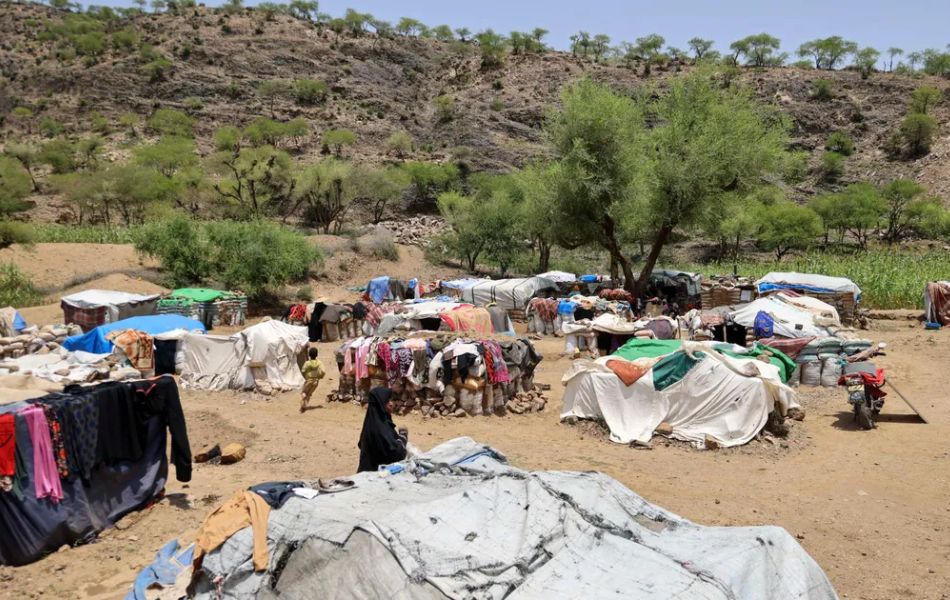
In the humanitarian context, the United Nations High Commissioner for Refugees (UNHCR) announced on 12 September that escalating fighting had displaced approximately 50,000 people in Taiz, southern Hodeidah, and surrounding areas, amid civilian deaths and injuries, including children. SAM also received information concerning five displaced families who arrived at Al-Sha'ab 2 Camp, among them children suffering from shrapnel injuries, some of whom urgently require medical intervention.
On 11 September, journalist Wadi' Atta reported that the family of engineer Abdulghani Razah came under gunfire while traveling in a passenger minibus toward Al-Khawkhah.
According to the source, the shooting killed 15-year-old Khaled Abdulghani Razah, his sister Marina, and their grandfather Hassan Abdu Saleh, while the children’s mother and her two other children, Manal and Khalil, sustained gunshot and shrapnel injuries to different parts of their bodies. The injured were later transferred to hospitals in Al-Jarrahi and Zabid.
The source attributed the shooting to armed members of the Houthi group and said the minibus came under a barrage of gunfire while the family was traveling along the road. He also alleged that armed men attempted to prevent people in the area from assisting the victims before acquaintances of the family intervened and the injured were evacuated.
These details broadly correspond with an earlier account concerning members of the same family being killed while traveling from Hays, while the new testimony provides the names of those injured and additional details regarding the circumstances of the incident.
SAM stresses the need for an independent investigation to establish the precise location and source of the gunfire and the military circumstances surrounding the incident. If it is established that the vehicle was civilian and that those on board were not directly participating in hostilities, deliberately directing fire against them would constitute a violation of the prohibition against targeting civilians.
Also on 11 September, journalist Wadi' Atta reported that teacher Mohammed Omar Aqad and his son Younis were targeted by a drone while traveling by motorcycle on the road between Hays and Al-Khawkhah.
The source said the father and son were on their way to visit acquaintances and attributed the attack to the Houthi group, but the post did not provide details regarding the nature of their injuries or a final casualty assessment.
On 13 September, journalist Mohammed Taher reported that Al-Qasr Crossing and several residential neighborhoods in eastern Taiz city were subjected to shelling with heavy and medium weapons, which he attributed to the Houthi group.
In the same post, the source also reported rocket fire targeting villages in Duba' Al-Dakhil subdistrict in Al-Shamayatayn District, south of Taiz city. At the time of preparing this briefing, no verified information was available regarding casualties or the extent of damage to homes and civilian facilities resulting from these attacks.
On the same day, journalist Fares Al-Hemyari reported shelling in the Duba' area of Al-Shamayatayn District, stating that one rocket projectile landed near a primary school in a residential village, causing fear and panic among residents.
This account corresponds, as regards the occurrence of shelling in the Duba' area on 13 September, with Mohammed Taher’s report of rocket fire targeting villages in Duba' Al-Dakhil. The available sources did not report any injuries or direct damage to the school.
SAM stresses that schools and educational facilities are, by their nature, civilian objects protected from attack unless they are used in a manner that renders them military objectives under the criteria established by international humanitarian law. The use of explosive weapons near residential areas and educational facilities also requires careful verification of the intended target and all feasible precautions to protect civilians.
On 13 September, Al-Masdar Online reported that the Security Administration of Al-Hadd District in Lahj Governorate had given workers and tenants originating from northern governorates 48 hours to arrange their affairs and leave the district.
According to the source, the security authorities justified the decision by citing “the state of war and ongoing armed confrontations along the front lines” and the security conditions in the area.
This information raises serious human rights concerns if the measure is applied collectively to individuals on the basis of their region or governorate of origin without an individualized assessment of any specific security risk.
SAM stresses that security considerations do not justify discriminatory collective measures against civilians based on their regional origin. Any restrictions on residence, movement, or employment must have a clear legal basis and be genuinely necessary, individualized, and proportionate, and must not result in arbitrary eviction or displacement.
SAM calls on the local and security authorities to review the decision, ensure that no person is expelled, detained, or harassed solely because they originate from a particular governorate or region, and provide appropriate legal safeguards for any individualized security measures warranted by specific circumstances.
On 12 September, the United Nations High Commissioner for Refugees announced that escalating fighting in Yemen had displaced approximately 50,000 people in Taiz, southern Hodeidah, and surrounding areas, alongside civilian deaths and injuries, including children.
UNHCR noted that this new crisis is unfolding in a country already hosting approximately 4.5 million internally displaced people, amid deteriorating basic services and an urgent need to ensure safe access for life-saving humanitarian assistance to affected families.
UNHCR’s update indicates that displacement figures have continued to rise compared with estimates published in previous days, reflecting the rapidly changing situation on the ground and the expanding geographic areas from which civilians are fleeing.
On 13 September, Aljoumhouriya TV published video testimonies from displaced people who said they had fled Al-Mokha and other areas along the western coast following the escalation of fighting and shelling.
One displaced person described leaving his home with his family under heavy shelling, abandoning furniture and possessions, and arriving in Aden without shelter, food, or adequate basic necessities. The testimonies also included allegations that homes were shelled and residences entered after control over areas along the western coast changed hands.
In additional testimonies published by the channel on the same day, displaced people described fear and sudden flight from their areas after the military situation changed, as well as their inability to take their belongings or secure basic necessities.
SAM treats these recordings as direct testimonies reflecting the speakers’ experiences of displacement, fear, and loss of property, while allegations concerning responsibility for specific acts of shelling, entry into homes, or other violations require independent verification on an incident-by-incident basis.
During the same period, SAM received direct information concerning five displaced families who had arrived at Al-Sha'ab 2 Camp, including children suffering from shrapnel injuries, some of whom require urgent medical care.
According to information received by the organization, the cases include a 17-year-old girl with shrapnel injuries to the head and face; a seven-year-old girl with a shrapnel injury to her hand; another girl suffering from shrapnel injuries to her hand and severe ear pain; and a two-year-old boy with shrapnel injuries to the face.
At this stage, SAM does not have complete information regarding the incidents in which these children were injured, their locations, or the types of weapons involved. The organization therefore continues to verify the detailed circumstances of their injuries.
SAM stresses the urgent need to ensure that the injured children and other members of the displaced families receive appropriate medical care, including surgical assessment and treatment for shrapnel injuries, as well as protection services and psychological support where needed.
The incidents monitored by SAM during this period demonstrate that civilians continue to face multiple risks extending beyond areas of direct fighting to roads used by civilians, villages and residential neighborhoods, the vicinity of schools, and displacement and reception sites.
The incident involving the family in Hays and the report concerning the targeting of teacher Mohammed Omar Aqad and his son raise particular concerns regarding the safety of civilians traveling on roads close to areas of military operations.
The shelling of Duba' and eastern neighborhoods of Taiz city, coupled with a projectile landing near a primary school, also highlights the dangers faced by residents when weapons with wide-area effects are used in populated areas.
SAM stresses that international humanitarian law requires parties to the conflict at all times to distinguish between civilians and combatants and between civilian objects and military objectives, and to take all feasible precautions when planning and carrying out attacks. Attacks directed against civilians, as well as indiscriminate and disproportionate attacks, are prohibited.
UNHCR data indicating the displacement of approximately 50,000 people demonstrates that the humanitarian crisis is expanding rapidly, while families are arriving in reception areas after losing homes, property, and livelihoods and urgently require food, shelter, water, healthcare, and protection.
The deadline imposed on workers and residents originating from northern governorates in Al-Hadd District, Lahj Governorate, raises separate concerns regarding non-discrimination and protection against arbitrary eviction or displacement, underscoring the need to ensure that security measures do not become collective penalties based on regional origin.
SAM calls for independent and effective investigations into incidents of gunfire, shelling, and drone strikes that have caused or may have caused civilian harm; for the protection of schools, residential areas, and routes used by civilians; and for rapid humanitarian and medical access to displaced families and injured children.
SAM continues to collect information and verify the identities of victims and injured persons, the types of weapons used, attack locations and points of origin, and the parties responsible, while distinguishing between direct testimony and allegations that still require additional evidence before they can be treated as established facts.
15 September 2026
SAM for Rights and Liberties monitored, between 13 and 15 September 2026, the continued deterioration of the humanitarian and security situation associated with the expansion of hostilities in several areas of Yemen, amid an accelerating wave of displacement, new attacks near IDP camps and civilian homes in Marib, the shelling of a judicial facility in central Taiz city, and reports of arrests and the looting of private property in areas along the western coast.
In the latest indication of the scale of the crisis, the United Nations High Commissioner for Refugees (UNHCR) in Yemen reported that approximately 94,000 people had been forced to flee their homes in recent days, while more than 2,000 people had been compelled to cross the sea by boat toward Djibouti. This update represents a further increase compared with figures published in previous days, reflecting the widening scale of displacement and the rapidly changing situation on the ground.
On 13 September, the Yemeni Ministry of Human Rights announced a preliminary government toll which it said was based on documentation and reports received since 3 September, recording 150 civilians killed, more than 200 injured, and approximately 85,000 displaced. It also cited data indicating that around 2,000 people had reached Djibouti. SAM treats these figures as a preliminary toll attributed to the Ministry and does not regard them as an independently verified final toll in the absence of a detailed breakdown of the incidents and victims comprising these figures.
On 13 September, journalist Fares Al-Hemyari reported hearing three explosions which, according to his information, resulted from missile attacks attributed to the Houthi group in Marib Governorate, noting that one of the missiles landed in the vicinity of Al-Suwaida IDP Camp.
In the immediate aftermath, the source expressed concerns that there might have been casualties. However, the information available to SAM does not include a subsequently verified casualty toll specifically linked to this incident.
The nature of the location, close to a camp sheltering displaced civilians, raises concerns about the risks posed by missile weapons to concentrations of civilians and warrants verification of the impact site, intended target, launch location, and the precautions taken to avoid harm to the population.
On 14 September, the Executive Unit for IDP Camp Management in Marib announced that a ballistic missile attributed to the Houthi group had landed in an area containing IDP camps and civilian homes in Raghwan District, northwestern Marib.
The Unit said the explosion produced a powerful blast and caused panic among residents, but confirmed that no casualties were recorded in the attack.
On the same day, Riyadh Al-Adeeb published video footage which he said documented remnants of the missile that had fallen in Raghwan. The footage may provide an additional element for technical verification of the type of projectile.
SAM stresses that IDP camps and civilian homes are protected as civilian objects unless they are used for purposes that render them military objectives under international humanitarian law. The absence of casualties in a particular attack does not remove the need to investigate compliance with the rules of distinction, proportionality, and precautions.
On 15 September, journalist Mohammed Taher reported that a projectile attributed to the Houthi group struck the Judicial Complex in the Jabal Jarrah area in central Taiz city.
SAM stresses that judicial buildings are, by their nature, civilian objects protected from attack and lose such protection only if they meet the legal criteria for classification as military objectives. Even in such circumstances, the rules of proportionality and precautions in attack remain applicable.
On 15 September, Al-Masdar Online, citing local and close sources, reported the death of Ali Farouq Al-Khawlani from injuries sustained in an ambush targeting the convoy of his father, Brigadier General Farouq Al-Khawlani, commander of the First Infantry Division of the National Resistance Forces, during a withdrawal from areas along the western coast.
According to the source, the ambush also resulted in deaths, injuries, and the capture of several members of the convoy, while Brigadier General Farouq Al-Khawlani was taken into the custody of the Houthi group, which later published photographs showing him after his capture.
SAM notes that the capture of a member of armed forces or an armed group during military operations does not in itself constitute a violation. However, persons who fall into the power of an opposing party or who are hors de combat are protected against killing, torture, and cruel or degrading treatment, and their lives, dignity, and physical integrity must be respected.
On 13 September, the Yemeni Journalists Syndicate announced that it had received a report concerning the arrest from his home of journalist Sadiq Shali, Director of the Media Center of the National Resistance, and attributed the arrest to the Houthi group.
The Syndicate said that his place and conditions of detention were unknown and called for his whereabouts to be disclosed, his release, and guarantees for his safety and protection from any abuse.
In the same context, the Syndicate expressed concern over the situation of journalists in Al-Mokha, stating that the fighting had forced dozens of journalists to flee to Aden, where they were facing difficult humanitarian and living conditions.
SAM stresses that journalists do not lose the protection afforded to civilians merely by carrying out journalistic work, unless and for such time as they directly participate in hostilities. The whereabouts of any detainee must also be disclosed, and detainees must be afforded fundamental legal safeguards and protected from torture, ill-treatment, and enforced disappearance.
On 14 September, the Hodeidah Governorate Media Office, citing local sources, reported that members of the Houthi group had carried out raids and seizures of private property over a two-day period in Hays city, southern Hodeidah Governorate.
According to the source, the affected property included land, farms, grocery shops, motorcycle shops, as well as furniture and personal belongings from the homes of residents who had left the city because of the fighting. The source said the operations affected property belonging to dozens of residents, amid concerns that such practices could continue and expand.
SAM has not been able to independently verify all the reported cases, the extent of the property seized, or the specific circumstances of each incident. It therefore treats these reports as allegations requiring case-by-case documentation.
If the seizure of private property for personal purposes, or without lawful justification or imperative military necessity, is established, such conduct may amount to pillage, which is prohibited under international humanitarian law.
In a statement issued on 13 September, the Yemeni Ministry of Human Rights said it had documented, since 3 September, the killing of 150 civilians and injury of more than 200 others, in addition to the displacement of approximately 85,000 people.
The Ministry also reported incidents involving the shelling of residential areas and IDP camps in Taiz, Hodeidah, and Marib; raids and looting of premises belonging to international organizations, homes, and government institutions; and the detention of a journalist, government employees and officials, and members of the judiciary.
The Ministry further stated that it was following up on reports of alleged extrajudicial killings, including the targeting of wounded persons inside medical facilities.
The published materials do not provide sufficient detail on all the individual cases comprising the overall toll or on the reports concerning alleged extrajudicial killings. SAM therefore considers that these allegations require independent investigation and case-by-case documentation before any final legal characterization is made.
SAM stresses that the wounded, the sick, and persons who are hors de combat enjoy special protection under international humanitarian law. Attacks on their lives or physical integrity, or the arbitrary denial of medical care, are prohibited.
In the latest humanitarian update reviewed by SAM, the United Nations High Commissioner for Refugees in Yemen reported that the deteriorating security situation and escalating hostilities in various areas and along the western coast had forced approximately 94,000 people to flee their homes in recent days.
UNHCR said that more than 2,000 people had also been forced to flee by boat toward Djibouti, off Yemen’s coast, indicating that the effects of the conflict and displacement are extending beyond the land boundaries of the areas affected by hostilities.
This figure represents a significant increase compared with estimates published during the early days of the escalation and indicates that displacement is no longer limited to movement between Yemeni districts and governorates, but now also includes maritime crossings that carry additional risks related to safety and access to protection, shelter, and essential services.
Developments recorded between 13 and 15 September demonstrate the continuing expansion of the civilian impact of hostilities, with IDP camps and areas inhabited by displaced people exposed to the risks of shelling, continued large-scale displacement, and simultaneous reports of arrests, looting of private property, and disruption to civilian institutions.
The impact of missiles in the vicinity of Al-Suwaida Camp and IDP camps and civilian homes in Raghwan raises particular concerns because of the vulnerability of displaced populations and their dependence on sites that are expected to provide a degree of safety after they have fled areas of fighting.
The shelling of the Judicial Complex in Taiz likewise underscores the importance of protecting civilian institutions and ensuring that they are not subjected to attack unless they have actually become military objectives under the strict legal criteria governing such classification.
The situation of journalists in Al-Mokha, including the detention of Sadiq Shali and the displacement of dozens of media workers, adds another dimension to the crisis concerning freedom of the press and the safety of media professionals in areas undergoing rapid changes in military control.
Allegations concerning the seizure of residents’ property in Hays raise concerns regarding the protection of private property in areas where control has changed hands and underline the need to prevent acts of reprisal, pillage, or confiscation that lack a lawful basis.
The rise in displacement to approximately 94,000 people, together with more than 2,000 people fleeing by sea toward Djibouti, points to an accelerating displacement crisis that exceeds the capacity of local host communities and requires an urgent humanitarian response encompassing shelter, food, water, healthcare, protection, and safe access to assistance.
SAM stresses that all parties to the conflict are required at all times to distinguish between civilians and combatants and between civilian objects and military objectives, respect the principle of proportionality, and take all feasible precautions to avoid or minimize civilian harm.
The organization calls for independent and effective investigations into attacks that struck or occurred near IDP camps and civilian homes in Marib, the shelling of the Judicial Complex in Taiz, allegations of arrests and looting of property in areas along the western coast, and reports concerning the killing of wounded persons or others who were hors de combat.
SAM continues to collect information and verify casualty and displacement figures, the identities of detainees and missing persons, the types of weapons used, projectile impact and launch locations, and the extent of property damaged or seized, while maintaining a clear distinction between established facts, preliminary figures, and allegations that still require independent verification.