

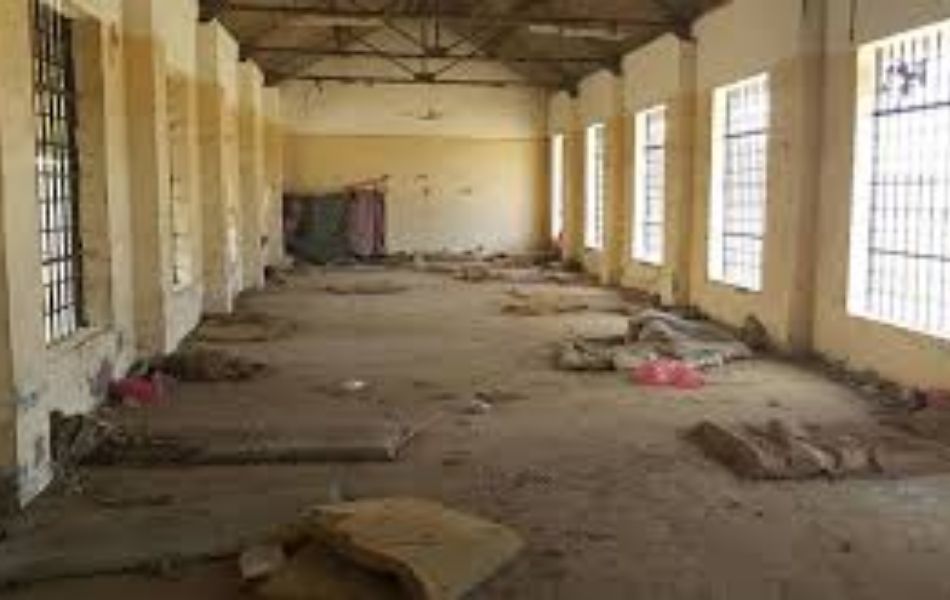
SAM for Rights and Liberties stated that it welcomes in principle the directives issued today, Monday, 13 January 2026, by the Presidential Leadership Council regarding the identification of illegal detention sites in the governorates of Aden, Lahj, and Al-Dhalea. The organization considers these directives a belated official acknowledgment of the existence of detention practices outside the framework of the law—practices that SAM has documented and repeatedly warned of over the past years.
The organization emphasized that, despite their importance, these directives remain legally and human-rights–wise insufficient if they are treated merely as an internal administrative measure, or if their implementation is entrusted to the very agencies that face serious allegations of involvement in these violations. SAM stressed that what occurred in those detention facilities cannot be described as individual lapses or isolated abuses; rather, it constitutes a pattern of grave and systematic human rights violations, including arbitrary detention, enforced disappearance, ill-treatment, and torture—acts criminalized under the Yemeni Constitution, national laws, and the international conventions ratified by the Republic of Yemen.
SAM explained that this phase represents an extremely sensitive part of Yemen’s national memory and must not be handled as a transient security or political file dictated by the exigencies of the moment. Illegal prisons, and the practices and violations associated with them, have left a deep wound in the collective consciousness. This chapter cannot be closed without a comprehensive and public judicial investigation and a national process that involves society at large and restores dignity to victims as rights-holders, not merely as numbers in records or reports.
The organization stressed that the required path must be fundamentally judicial, beginning with an investigation into the existence of these prisons, their legal status, the entities that supervised or effectively controlled them, and the chain of command and orders that managed them or provided cover. This should include hearing the testimonies of victims and their families, documenting the physical, psychological, and social consequences of detention and abuse, and ultimately determining findings and individual and institutional legal responsibilities without exception.
In line with its longstanding positions, SAM renewed its call for the formation of an independent and impartial judicial commission of inquiry, vested with full powers to access all official and unofficial places of detention, review records, protect witnesses and whistleblowers, and ensure transparency. Any investigation lacking independence, publicity, and clear judicial mandate, the organization warned, will only obscure the truth and reproduce impunity.
SAM noted that the multiplicity of armed and security actors on the ground—particularly in Aden and Hadramout—has created a complex reality in which official authorities overlap with de facto forces. This has led to the involvement of certain components of the security apparatus—whether through direct action, cover-up, or silence—in a network of violations. The organization considered this reality to render any internal or administrative, non-independent investigation devoid of credibility and to undermine the trust of victims and their families in any measures not grounded in accountability.
SAM concluded by affirming that identifying detention sites should not be an end in itself, but rather an entry point to uncovering the full truth, determining the fate of all detainees and the forcibly disappeared, providing reparations, and ensuring accountability and non-impunity. This is a legal and moral obligation that is indivisible, and a necessary foundation for restoring trust and building a state that respects the rule of law and human rights, and that safeguards the memory of victims from erasure or politicization.